Shopify Theme Features Every Online Store Needs
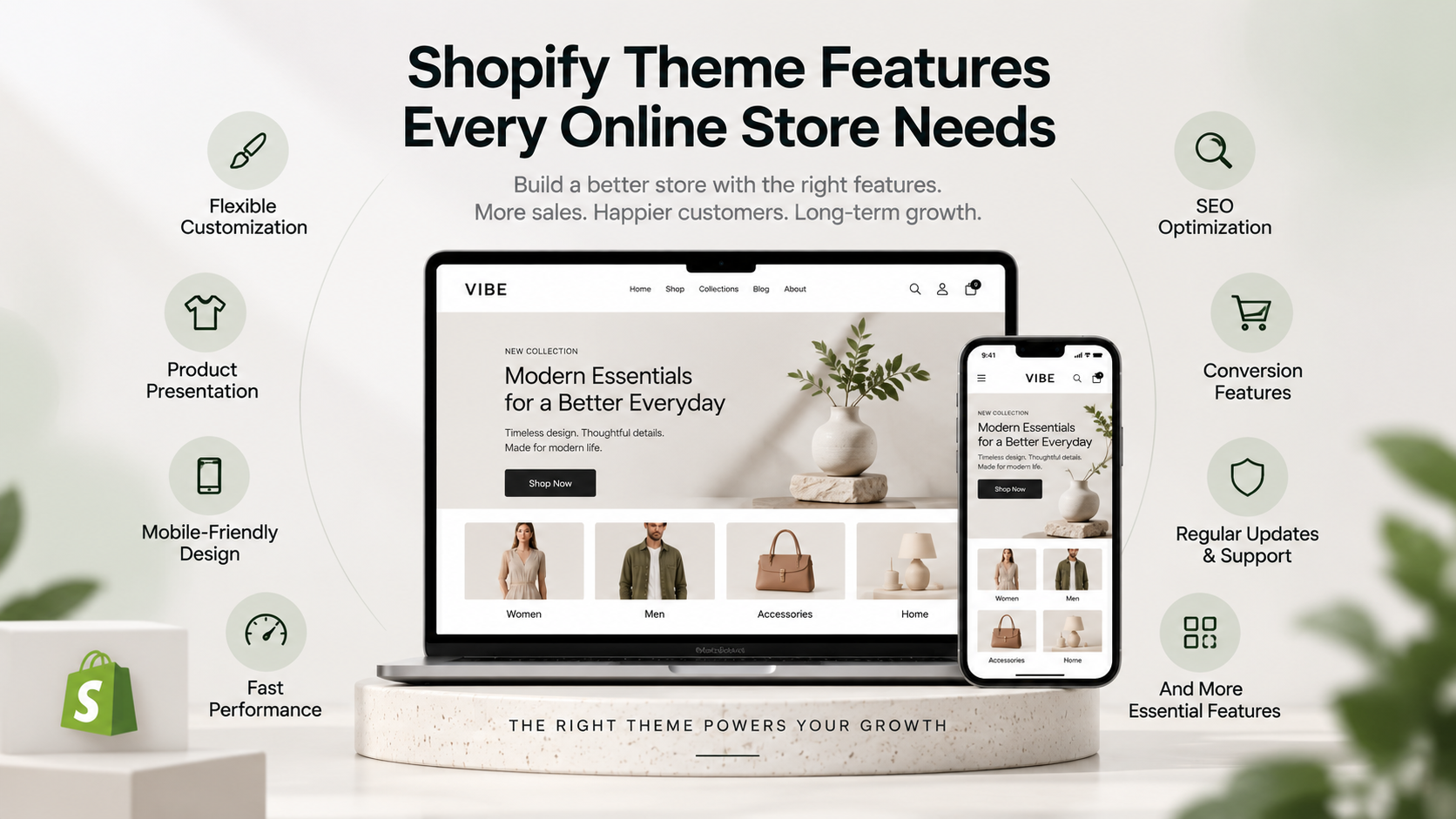
Choosing a Shopify theme is about more than finding an attractive design. The right Shopify theme features can affect how customers discover products, navigate your store, shop on mobile devices, and complete their purchases.
A theme with the right combination of design flexibility, product presentation, performance, SEO, and conversion features can give your online store a much stronger foundation.
But you don’t necessarily need a theme packed with hundreds of features. What matters is having the Shopify theme features that solve real problems for your customers and make your store easier to manage.
In this guide, we’ll look at the most important features every online store should consider before choosing a Shopify theme.
Table of contents
- Flexible Customization Features
- Product Presentation Features
- Mobile-Friendly Shopify Theme Design
- Collection and Product Discovery Features
- Fast Performance
- SEO-Friendly Shopify Theme Features
- Search Features
- Conversion-Focused Features
- Cart Features
- Promotional Features
- Product Recommendations
- Social Proof and Trust Features
- Blog and Content Features
- Accessibility Features
- Theme Updates and Developer Support
- Customization Without Coding
- Which Shopify Theme Features Matter Most?
- Final Thoughts
Flexible Customization Features
Every online store has a different brand identity, so a Shopify theme should give you enough flexibility to create a store that feels like your own.
A good theme should allow you to customize important visual elements without requiring extensive coding knowledge.
Look for options such as:
- Flexible homepage sections
- Customizable colors
- Typography settings
- Multiple section layouts
- Custom content blocks
- Flexible spacing and design controls
- Custom CSS options
The goal is not to customize every pixel.
Instead, you should be able to create a consistent visual identity across your homepage, collection pages, product pages, and other important areas of your store.
Why Customization Matters
A store selling premium fashion products may need a very different visual experience from an electronics store.
Flexible customization allows the same theme to adapt to different products, audiences, and brands.
Before buying a theme, check how much you can change using the theme editor.
If you need to edit code for every small design adjustment, the theme may become difficult to manage as your store grows.
Product Presentation Features
Your products are the heart of your ecommerce store, so product presentation should be one of the most important areas to evaluate.
A strong Shopify theme should make it easy for customers to understand what you’re selling and explore different product options.
Useful product presentation features include:
- Large product images
- Multiple product images
- Image zoom
- Product videos
- Image galleries
- Variant-specific images
- Color swatches
- Size selectors
- Product badges
- Product recommendations
For stores selling fashion, beauty, furniture, or other visually driven products, high-quality product presentation can have a particularly strong impact on the shopping experience.
Product Cards
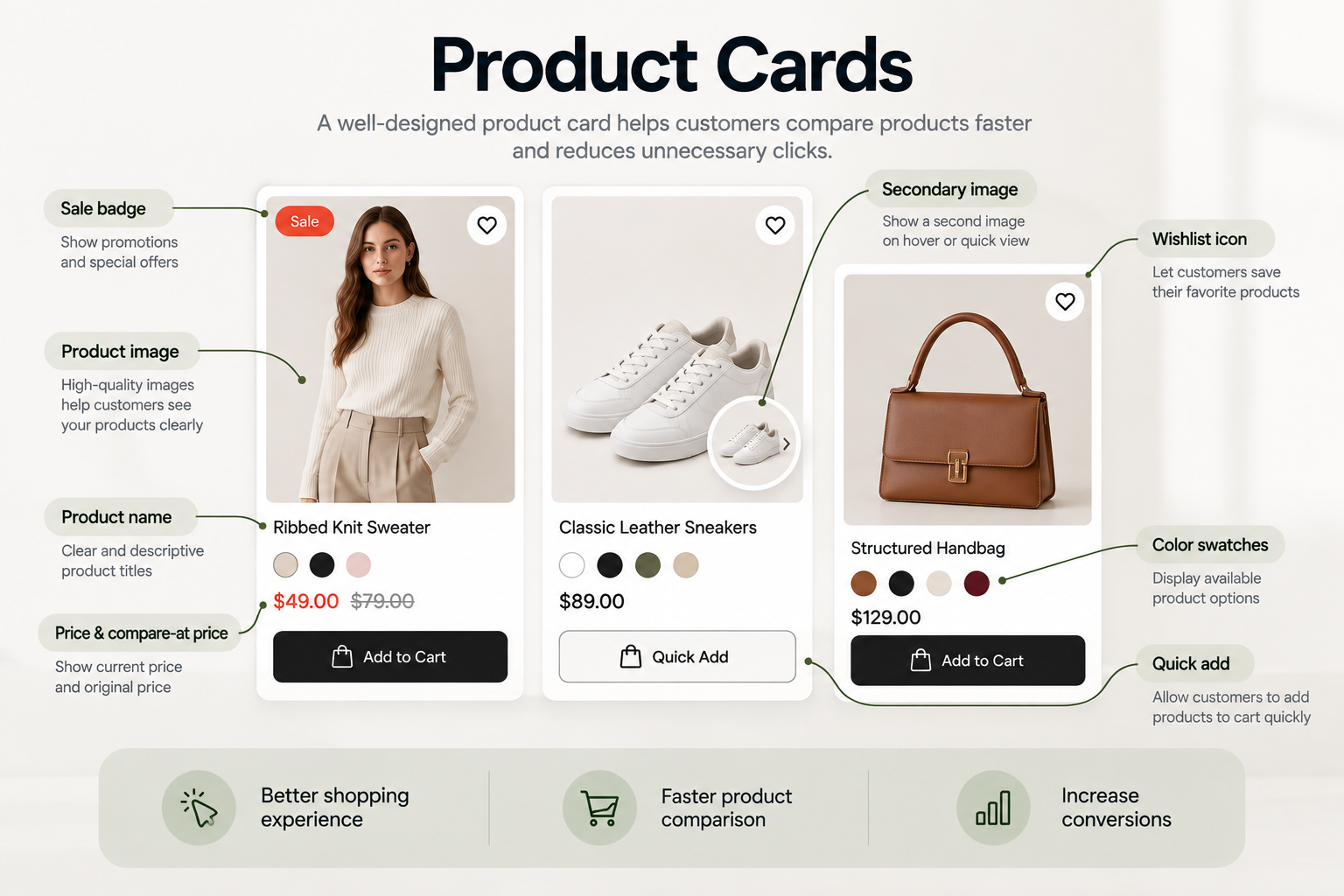
Don’t overlook product cards.
Customers often browse many products before opening an individual product page.
A good product card can display:
- Product image
- Product name
- Price
- Compare-at price
- Sale badge
- Color swatches
- Secondary image
- Quick add
A well-designed product card helps customers compare products faster and reduces unnecessary clicks.
Mobile-Friendly Shopify Theme Design
A modern ecommerce store needs to work well on smartphones.
Your Shopify theme features should not only look good on desktop. They should provide a smooth experience across different screen sizes.
Test the theme on:
- Smartphones
- Tablets
- Laptops
- Large desktop screens
Pay particular attention to navigation, product images, buttons, filters, and the cart experience.
Mobile Navigation
Mobile navigation deserves special attention.
Customers should be able to quickly access:
- Main categories
- Collections
- Search
- Account
- Cart
- Important promotional pages
A complicated mobile menu can make product discovery frustrating.
A simple and well-organized navigation system is usually more effective.
Collection and Product Discovery Features
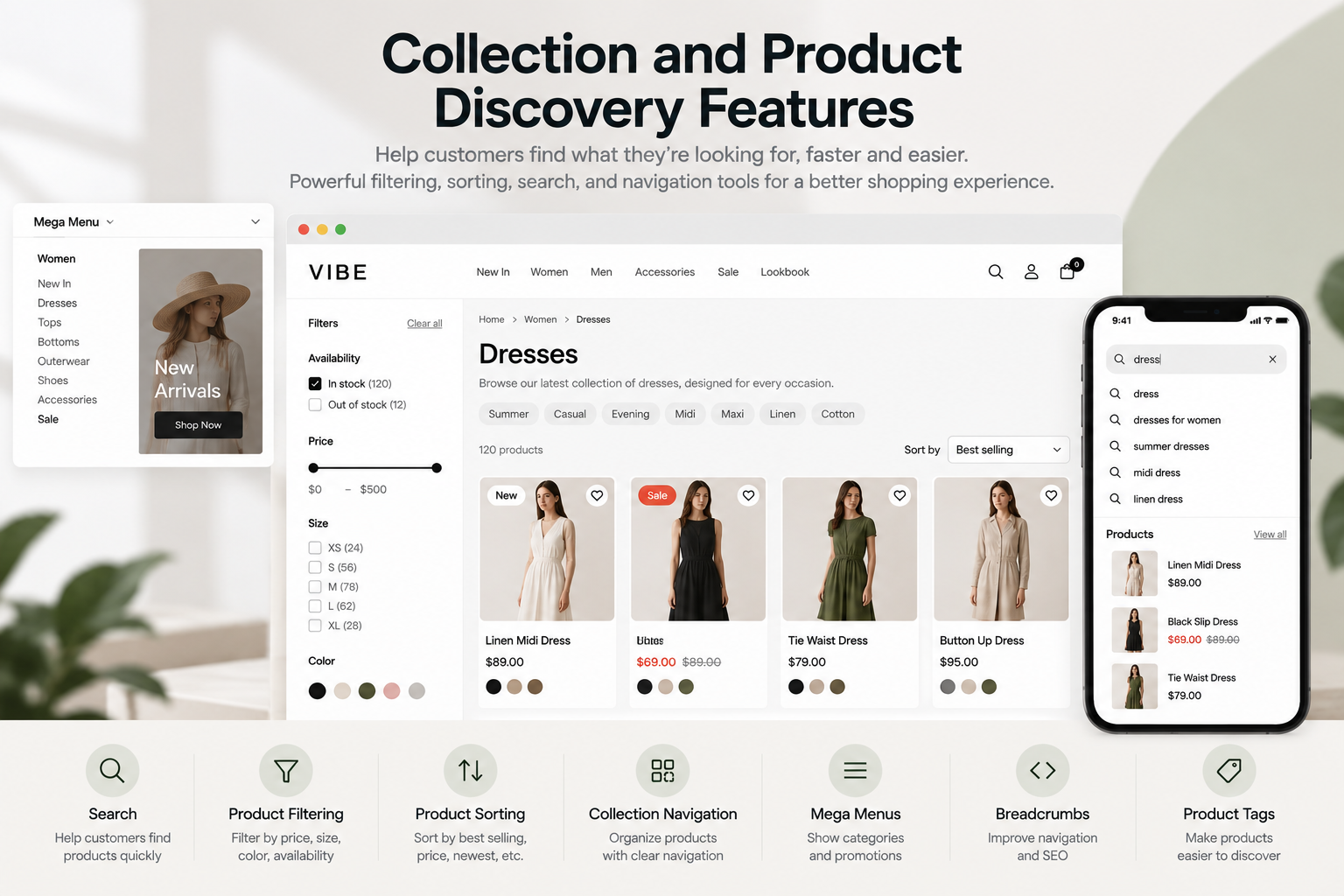
As your product catalog grows, customers need efficient ways to find what they’re looking for.
This is where collection and product discovery features become important.
Useful functionality can include:
- Product filtering
- Product sorting
- Search
- Collection navigation
- Mega menus
- Breadcrumbs
- Product tags
- Filter by price
- Filter by size
- Filter by color
- Filter by availability
These features are particularly useful for stores with large product catalogs.
Product Filtering
Imagine a customer visiting a clothing store with hundreds of products.
They may want:
Women’s → Dresses → Black → Size M → Under $100
Without effective filtering, finding the right product can take too long.
A theme that provides a clean filtering experience can make browsing much easier.
Fast Performance
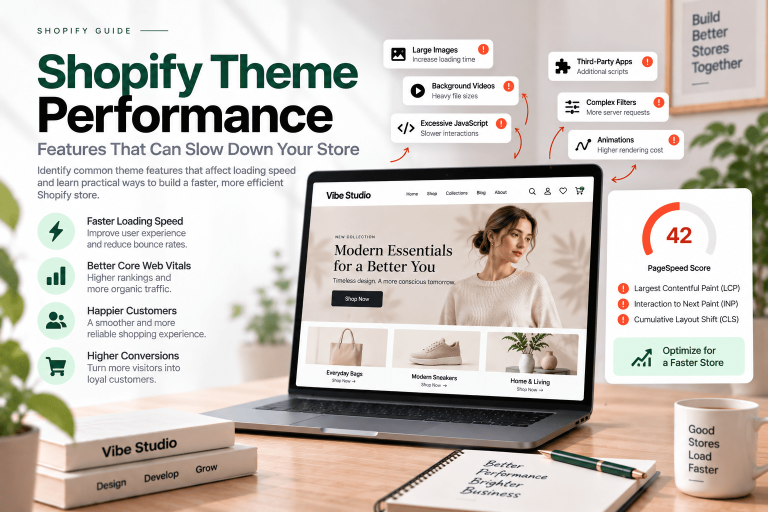
Performance is one of the most important technical considerations when choosing a Shopify theme.
A theme can have beautiful animations and advanced functionality, but unnecessary scripts and heavy assets can make the shopping experience slower.
Look for a theme that balances:
Design + Features + Performance
Important considerations include:
- Efficient JavaScript
- Optimized images
- Responsive image loading
- Minimal unnecessary scripts
- Efficient CSS
- Lazy loading where appropriate
- Good mobile performance
Why Theme Performance Matters
A slow store can create friction throughout the customer journey.
Customers may leave before viewing a product, completing checkout, or exploring additional collections.
Performance also contributes to the technical quality of your website and can support a better user experience.
The best Shopify theme isn’t necessarily the one with the most animations.
It’s the one that provides the features you need without unnecessary technical overhead.
SEO-Friendly Shopify Theme Features
Your theme should provide a strong foundation for search engine optimization.
A theme cannot guarantee high rankings, but it can make technical SEO easier to manage.
Look for features and structures that support:
- Responsive design
- Clean HTML
- Proper heading hierarchy
- Descriptive image alt text
- Structured data
- Canonical URLs
- Search engine-friendly navigation
- Fast page loading
SEO and Content Structure
Your theme should also make it easy to create useful content.
For example, you may want to add:
- Collection descriptions
- Product descriptions
- Blog articles
- FAQ sections
- Informational content
- Internal links
A technically solid theme combined with useful content gives your store a stronger SEO foundation.
Search Features
Site search is especially important for stores with many products.
Customers who use search often have a specific product or category in mind.
A useful search experience should provide:
- Search suggestions
- Product results
- Collection results
- Predictive search
- Clear search interface
- Mobile-friendly search
The faster customers can find the right product, the less friction there is in the buying journey.
Conversion-Focused Features
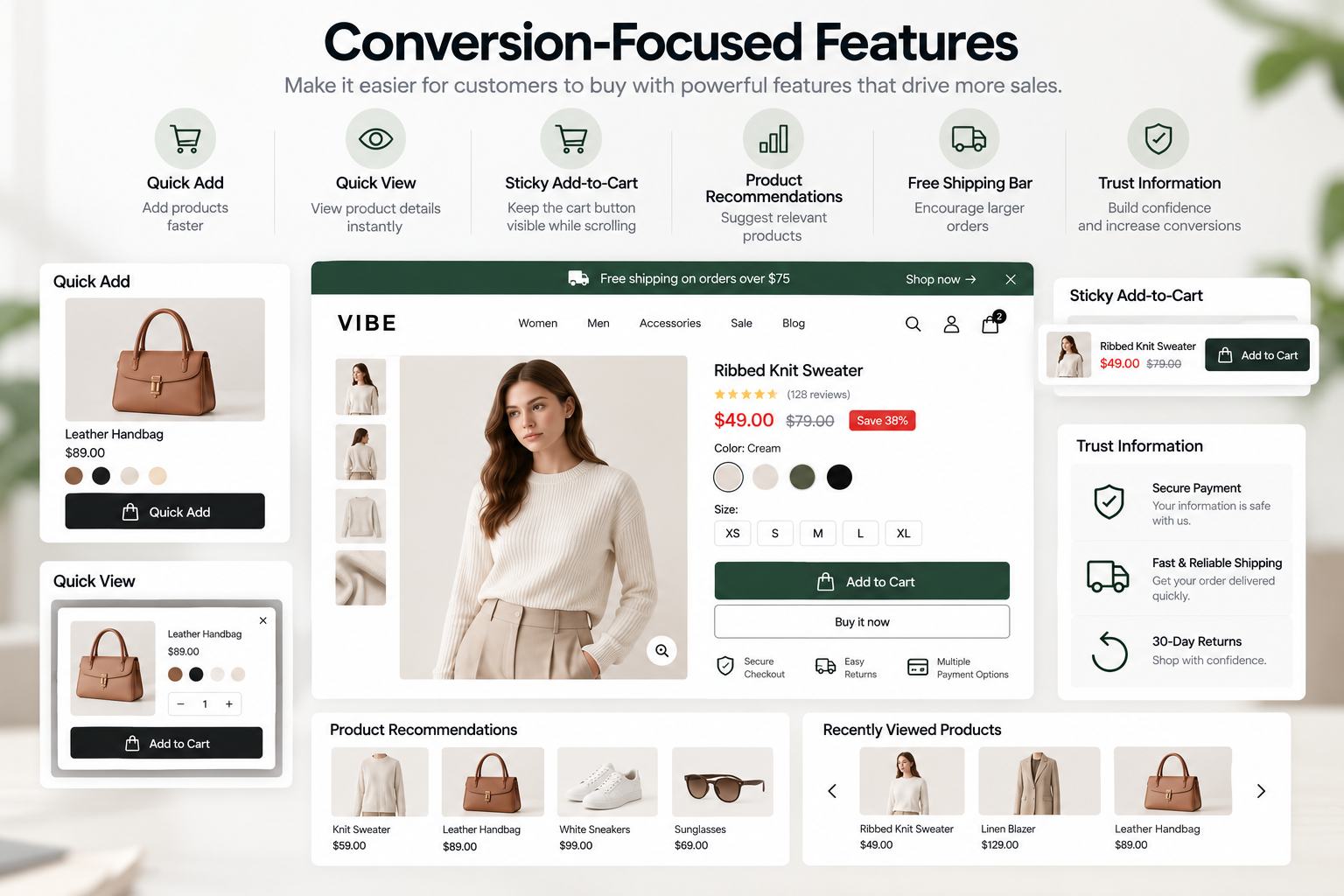
Good Shopify theme features should not only make your store look better. They should also make it easier for customers to buy.
Useful conversion features include:
- Quick add
- Quick view
- Sticky add-to-cart
- Product recommendations
- Recently viewed products
- Promotional banners
- Free shipping bars
- Trust information
- Sale badges
- Promotional sections
Quick Add and Quick View
Quick add allows customers to add products to their cart without opening a full product page.
Quick view lets customers see important product information without leaving the collection page.
These features can be particularly useful when customers are browsing many products.
However, they should be implemented carefully.
A theme should make shopping faster, not create additional interface clutter.
Cart Features
The cart is one of the most important steps in the customer journey.
Depending on your business, a theme may offer:
- Cart drawer
- Cart page
- Cart recommendations
- Free shipping progress bar
- Quantity controls
- Discount information
- Upsell sections
- Gift options
A well-designed cart should make it clear:
What am I buying?
How much does it cost?
What should I do next?
The fewer unnecessary obstacles between the cart and checkout, the better.
Promotional Features
Your theme should give you enough tools to communicate promotions without relying on excessive pop-ups.
Useful promotional sections include:
- Announcement bars
- Promotional banners
- Featured collections
- Promotional cards
- Seasonal campaigns
- Featured products
- Sale sections
- Newsletter sections
These features allow you to highlight important offers while keeping the overall design organized.
Product Recommendations
Product recommendations can help customers discover additional products.
For example, customers viewing a dress may also see matching shoes or accessories.
Useful recommendation areas include:
- Related products
- Frequently bought together
- Recently viewed products
- Recommended products
- Complementary products
The goal is to help customers discover relevant products rather than simply showing more products.
Social Proof and Trust Features
Customers need confidence before purchasing from an online store.
Depending on your business, useful trust-building elements can include:
- Customer reviews
- Star ratings
- Testimonials
- Trust badges
- Shipping information
- Return policies
- Secure payment information
- Frequently asked questions
These elements can be integrated into product pages and other parts of the shopping experience.
A good theme should give you flexible sections for displaying this information.
Blog and Content Features
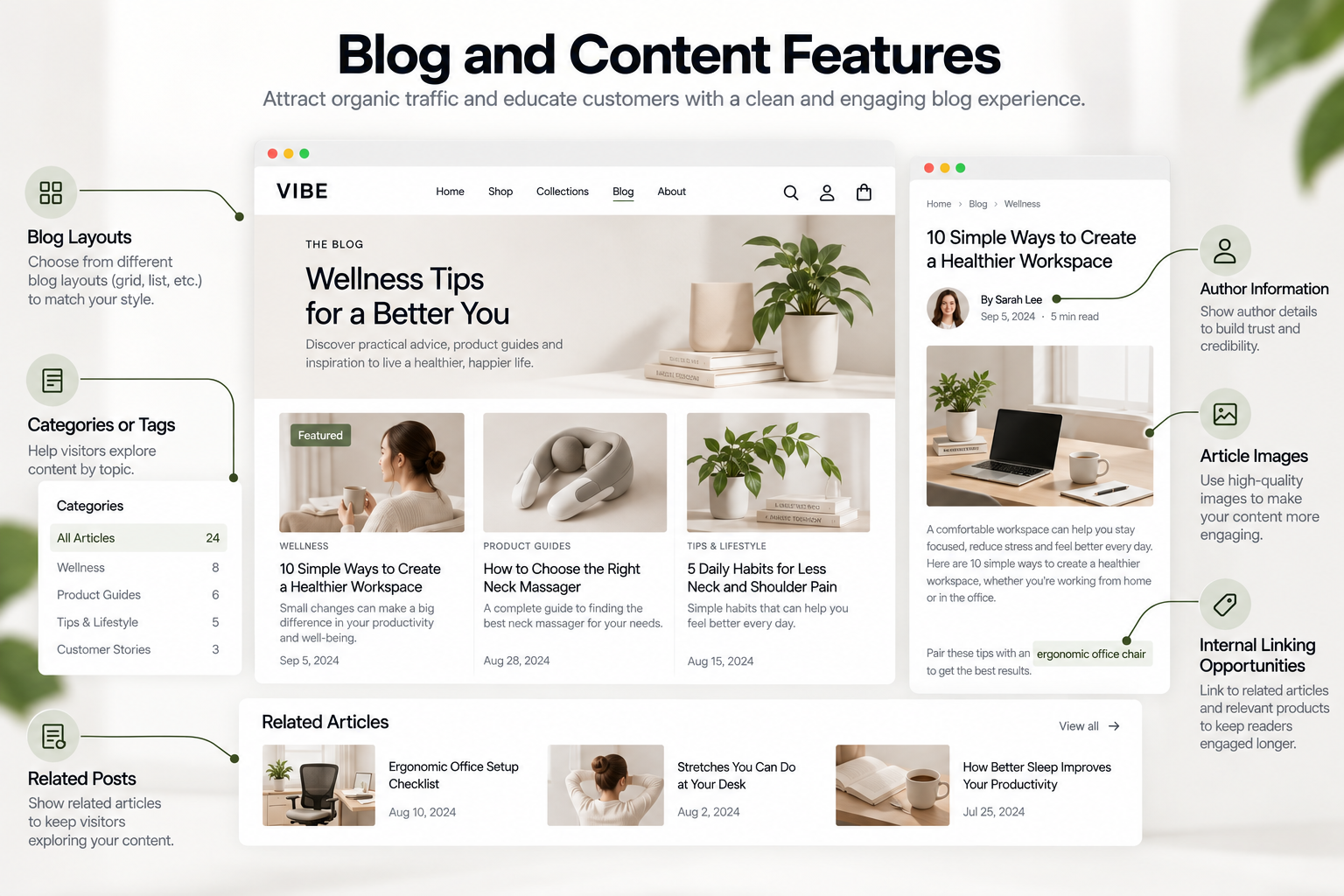
Content can play an important role in attracting organic traffic and educating customers.
If you plan to use content marketing, make sure your theme provides a clean blog experience.
Useful features include:
- Blog layouts
- Featured articles
- Related posts
- Article images
- Author information
- Categories or tags
- Internal linking opportunities
A well-designed blog can support your SEO strategy while giving customers more reasons to explore your store.
Accessibility Features
Accessibility is another consideration that is sometimes overlooked when choosing a theme.
A well-designed theme should aim to provide a usable experience for as many visitors as possible.
Consider features and practices such as:
- Keyboard-friendly navigation
- Sufficient color contrast
- Descriptive buttons
- Accessible forms
- Proper heading structure
- Visible focus states
- Alternative text for images
Accessibility isn’t just a technical checkbox.
A clearer interface can create a better experience for everyone.
Theme Updates and Developer Support
Even a great theme needs maintenance.
Shopify continues to evolve, and your theme should be actively maintained by its developer.
Before purchasing, check:
- Update history
- Changelog
- Documentation
- Support policy
- Developer reputation
- Customer reviews
Why Updates Matter
Regular updates can improve:
- Compatibility
- Performance
- Security
- Features
- Bug fixes
- Shopify integration
A theme is a long-term part of your ecommerce infrastructure.
Choose a developer that treats it that way.
Customization Without Coding
One of the biggest advantages of Shopify is its theme editor.
A good theme should allow merchants to build and modify pages using visual controls instead of requiring developers for every change.
Look for flexible sections that allow you to:
- Add content
- Rearrange sections
- Change layouts
- Update colors
- Modify typography
- Add promotional content
- Feature products and collections
The easier a theme is to manage, the less time you’ll need to spend making routine changes.
Which Shopify Theme Features Matter Most?
You don’t need every feature listed above.
The right combination depends on your business.
For a small store, the priorities might be:
- Clean design
- Mobile responsiveness
- Product presentation
- Fast performance
- Easy customization
For a large ecommerce store, you may need:
- Advanced filtering
- Mega menus
- Predictive search
- Product recommendations
- Advanced navigation
- Promotional tools
For a fashion store, important features may include:
- Large product images
- Color swatches
- Lookbooks
- Product filtering
- Quick add
- Editorial sections
The key is to identify your requirements before choosing a theme.
Final Thoughts
The best Shopify theme isn’t necessarily the theme with the longest list of features. What matters is whether it provides the right tools for your products, customers, and business goals.
Before choosing a theme, focus on the fundamentals: design, product presentation, navigation, mobile experience, performance, SEO, customization, and conversion features. The right combination can make your store easier to manage while creating a smoother shopping experience for your customers.
If you need help choosing the right Shopify theme, customizing an existing theme, or building a specific Shopify feature for your store, feel free to contact us. Our team can help you find the right solution for your Shopify store and turn your ideas into a practical ecommerce experience.